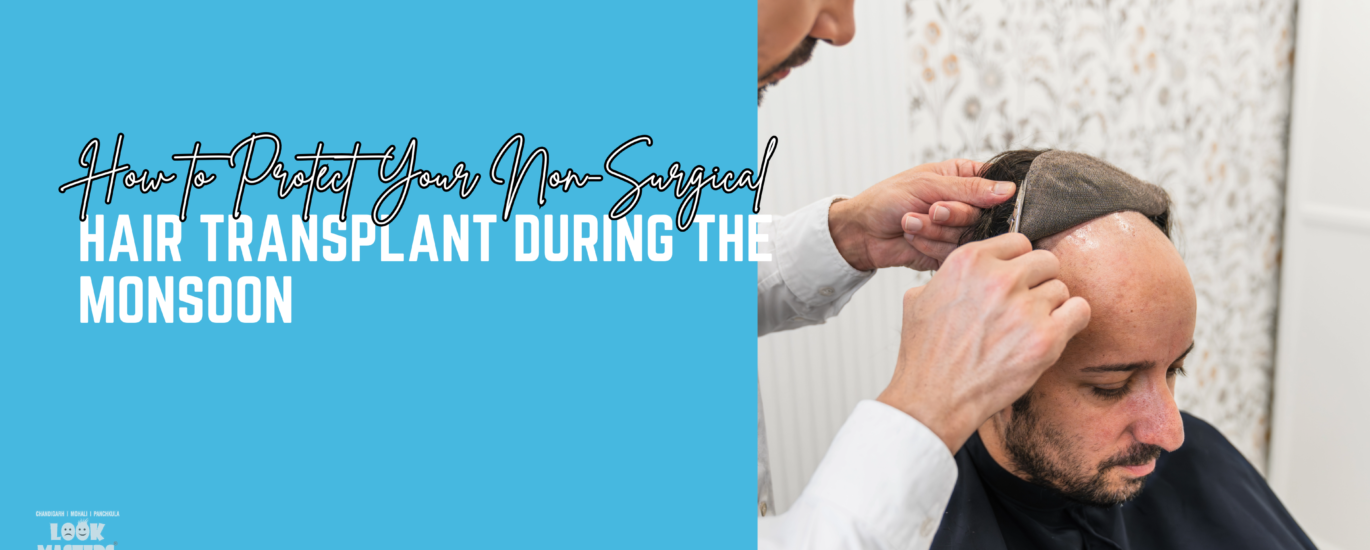
The monsoon season brings welcome relief from the summer heat, but it also creates several challenges for people using a non-surgical hair transplant or hair replacement system. Increased humidity, frequent rain, sweating, and excess moisture can weaken the attachment, create scalp discomfort, and affect the appearance of your hair system.
With proper maintenance and a few changes to your daily routine, you can keep your non-surgical hair transplant secure, fresh and natural-looking throughout the rainy season.
Why Does the Monsoon Affect Non-Surgical Hair Systems?
A non-surgical hair transplant is attached to the scalp using professional adhesives, tapes, clips, or bonding techniques. During the monsoon, excessive moisture and humidity may affect the strength of the attachment.
The scalp may also produce more sweat and oil, especially when the weather is warm and humid. If sweat, oil and moisture remain trapped under the hair system, they can cause itching, odour, irritation and reduced bonding strength.
Rainwater can also contain dust, dirt and pollutants. Allowing rainwater to remain on your hair system for too long may make the hair look dull, tangled or difficult to manage.
1. Keep Your Scalp Clean and Dry
Scalp hygiene becomes especially important during the monsoon season. Sweat, oil and moisture can build up quickly under a hair patch or hair system.
Follow the cleaning schedule recommended by your hair replacement specialist. During servicing, the scalp should be cleaned thoroughly, and old adhesive residue should be removed before the system is reapplied.
Avoid scratching the scalp if you experience mild itching. Scratching can disturb the attachment and may irritate the skin. Instead, contact your hair specialist if the discomfort continues.
2. Avoid Leaving Your Hair System Wet
Getting caught in the rain is sometimes unavoidable. However, you should not leave your non-surgical hair transplant wet for several hours.
After coming indoors, gently pat the hair with a soft towel. Do not rub the hair aggressively, as this can cause tangling, shedding, and damage to the hair system.
Allow the hair to dry naturally whenever possible. A hair dryer can also be used on a cool or low-heat setting. Keep the dryer at a safe distance and avoid directing excessive heat towards the base or bonded areas.
Never sleep while your hair system is wet. Wet hair is more likely to tangle, and prolonged moisture may affect the bond.
3. Use Monsoon-Friendly Hair Products
Heavy styling products can mix with sweat and moisture, leaving your hair system greasy and difficult to manage.
Choose lightweight, alcohol-free, and hair-system-friendly products. A mild shampoo, lightweight conditioner, and leave-in detangling spray may help maintain softness without causing excessive buildup.
Avoid applying oils, conditioners or serums directly to the base of the hair system. These products can weaken the adhesive or tape. Apply them only to the mid-lengths and ends of the hair.
Before using any new product, ask your hair replacement specialist whether it is suitable for your particular hair system.
4. Protect Your Hair From Direct Rain
Carrying an umbrella is one of the easiest ways to protect your hair system during the monsoon. You can also wear a loose-fitting, breathable cap when travelling in light rain.
Avoid wearing tight caps or helmets for long periods, especially when your scalp is sweaty. Tight headwear may create friction, trap moisture, and place pressure on the attachment.
After removing a helmet or cap, allow your scalp and hair to breathe. Gently check whether the edges of your hair patch remain properly attached.
5. Control Excessive Sweating
Humidity often increases scalp sweating, which may reduce the lifespan of some tapes and adhesives.
Try to remain in cool and well-ventilated spaces whenever possible. After exercising or spending time outdoors, gently dry the scalp area with a clean towel.
Do not pull or lift the hair system while wiping away sweat. Use gentle pressing movements around the hairline and attached areas.
People who sweat heavily may need more frequent servicing or a stronger moisture-resistant bonding option. A professional can recommend an attachment method based on your lifestyle, scalp condition, and daily activities.
6. Follow a Regular Maintenance Schedule
Do not delay your hair patch fixing or maintenance appointment during the rainy season. Regular servicing helps keep the scalp clean and ensures that the attachment remains secure.
During a professional maintenance session, the specialist may:
- Remove and clean the hair system
- Clean the scalp thoroughly
- Remove old tape and adhesive residue
- Inspect the base for damage
- Replace loose or weakened attachments
- Reapply and style the hair system
Your maintenance schedule will depend on the type of base, bonding method, scalp oiliness, and level of physical activity.
7. Do Not Try to Fix Loose Edges Carelessly
Humidity and sweating may occasionally cause the front or sides of a hair system to become loose. Avoid using ordinary glue, double-sided stationery tape or other household products to fix the problem.
Products that are not designed for hair systems may damage the base, irritate the scalp or make professional removal difficult.
Use only the adhesive or tape recommended by your hair replacement specialist. When you are unsure how to complete a temporary touch-up, book a professional hair patch fixing appointment.
8. Comb Your Hair Gently
Monsoon humidity may make the hair more tangled or frizzy. Use a wide-tooth comb or a soft hair-system brush to detangle it.
Start from the ends and slowly work your way towards the roots. Hold the hair gently near the base while combing to avoid placing unnecessary pressure on the attachment.
Avoid combing aggressively when the hair is completely wet. Apply a suitable leave-in conditioner or detangling spray before brushing.
9. Maintain Proper Ventilation
After wearing a cap, helmet, or rain cover, allow your hair and scalp to dry properly. Remaining in damp headwear for extended periods can create an uncomfortable environment under the hair system.
Whenever possible, spend a few minutes in a cool and dry room after travelling. Proper ventilation helps reduce moisture buildup and keeps the scalp feeling fresh.
10. Store Removable Hair Systems Correctly
If you use a removable hair patch or wig, store it in a clean and dry place when it is not being worn.
Use a wig stand or hair-system stand to maintain its shape and allow proper airflow. Avoid storing it inside a wet bag, closed box or humid bathroom.
Make sure the system is completely dry before storing it. Proper storage can prevent tangling, unpleasant odours and damage to the base.
11. Avoid Excessive Heat Styling
Hair straighteners, curling tools and high-temperature blow dryers may dry out the hair and reduce its lifespan.
During the monsoon, use heat styling only when necessary. Apply a suitable heat protectant to the hair lengths and use the lowest effective temperature.
Avoid bringing heated tools close to the hairline, tape, glue or base material. Excessive heat may weaken the attachment or damage delicate hair-system materials.
12. Book Professional Help When Needed
Contact your hair specialist if you notice:
- Frequent loosening of the hair system
- Persistent itching or scalp irritation
- Unpleasant odour
- Excessive tangling or dryness
- Visible adhesive residue
- Damage to the base
- An uneven or unnatural hairline
Early professional attention can prevent a small maintenance issue from becoming a major problem.
Common Monsoon Mistakes to Avoid
Certain habits may shorten the life of your non-surgical hair transplant during the rainy season.
Avoid:
- Sleeping with wet hair
- Using ordinary glue or tape
- Applying oil directly to bonded areas
- Scratching beneath the hair system
- Rubbing the hair roughly with a towel
- Using excessive heat while drying
- Wearing a wet cap or helmet for long periods
- Delaying professional maintenance appointments
Can You Wear a Non-Surgical Hair Transplant in the Rain?
Yes, you can continue wearing your non-surgical hair transplant during the monsoon. Professionally fitted hair systems are designed to support normal daily activities.
However, regular exposure to rain, sweat, and humidity may require additional maintenance. Protecting the hair from direct rain, drying it properly, and keeping the scalp clean can help maintain a secure and natural-looking result.
Final Thoughts
The monsoon season does not have to affect your confidence or stop you from wearing your preferred hairstyle. A consistent care routine can protect your non-surgical hair transplant from excessive moisture, sweat, tangling and attachment problems.
Keep your scalp clean, dry your hair properly after rain, and use only products recommended for hair replacement systems. Most importantly, schedule regular professional maintenance to keep your hair system comfortable, secure and natural-looking.
At Look Masters Global, we provide personalised hair loss solutions for men and women, including hair patch services, hair bonding, hair weaving, hair patch fixing and natural hair wigs. Our specialists can help you choose the right maintenance routine and attachment method for the monsoon season.
Book your consultation today and enjoy confident, natural-looking hair in every season.