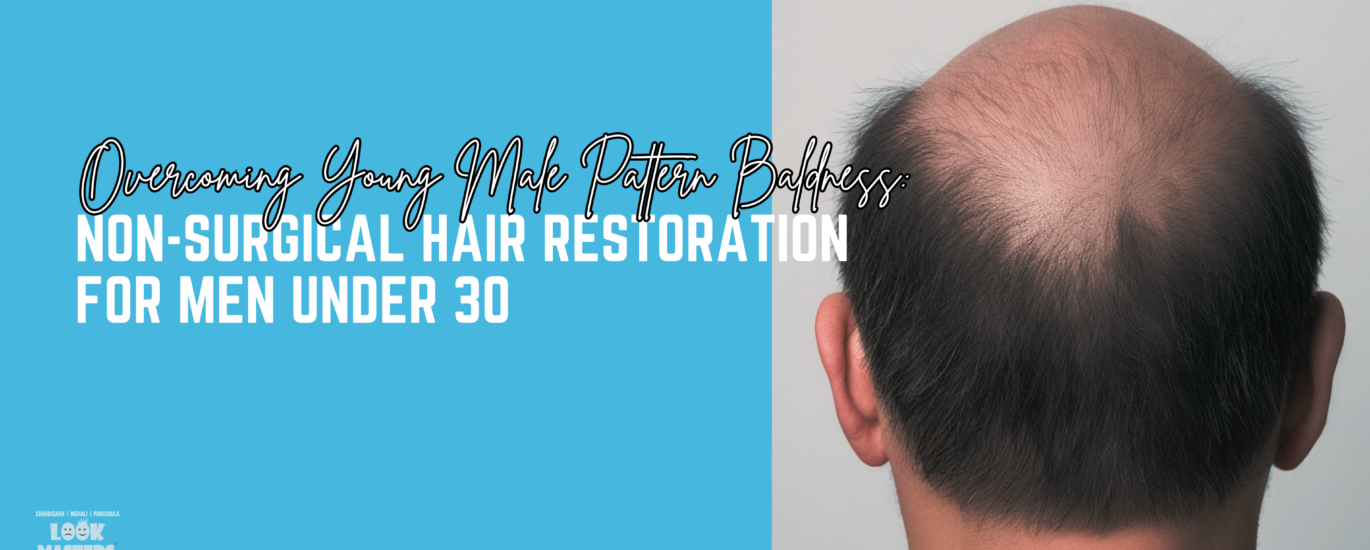
Noticing your hair thinning in your late teens or early twenties feels different than dealing with hair loss later in life. When you are under 30, your hair is closely tied to your identity, social life, dating confidence, and professional presence. Seeing extra strands in the shower drain or noticing your hairline receding under bright lighting can trigger sudden anxiety.
Male pattern baldness, medically known as androgenetic alopecia, affects millions of young men worldwide. In fact, studies show that roughly 20 percent of men experience noticeable hair loss by age 20, and that number rises to 30 percent by age 30. Despite how common it is, young men often feel isolated when it begins.
The good news is that experiencing hair loss in your twenties does not mean you have to accept thinning hair or settle for risky procedures. Modern non-surgical hair restoration offers immediate, natural-looking, and completely safe solutions tailored specifically for younger men.
Why Hair Loss Happens in Your 20s
To address hair loss effectively, it helps to understand what is happening beneath the scalp. Young male pattern baldness is primarily driven by three factors:
- Genetic Predisposition: If your father, uncles, or grandfathers experienced hair loss, your hair follicles are likely sensitive to specific hormonal changes.
- Dihydrotestosterone (DHT): DHT is a byproduct of testosterone. In genetically susceptible individuals, DHT binds to hair follicles, causing them to shrink over time. This process shortens the hair growth cycle, resulting in finer, shorter hair until the follicle stops producing hair altogether.
- Lifestyle and Environmental Stress: High stress levels, poor sleep, nutritional deficiencies, and environmental pollutants can accelerate the miniaturization process, causing hair loss to manifest much earlier than in previous generations.
Recognizing the early signs, such as a receding hairline around the temples or thinning at the crown, allows you to take control of your appearance before it affects your everyday confidence.
The Catch with Surgical Options for Men Under 30
When young men notice thinning, their first instinct is often to look into surgical hair transplants. However, hair restoration experts frequently advise caution when considering surgery for patients under the age of 30.
| Feature / Factor | Young Surgical Transplant | Custom Non-Surgical Patch |
| Future Hair Loss | Unpredictable ongoing loss behind transplant | Adapts seamlessly to future hair changes |
| Donor Hair | Requires limited, finite donor hair supply | No donor hair required |
| Density & Appearance | Risk of sparse or patchy, unnatural spots | Uniform, controllable density and style |
| Recovery & Comfort | High cost, surgical pain, and long recovery | 100% painless with zero recovery downtime |
1. Unpredictable Hair Loss Patterns
At 22 or 25, your pattern of hair loss has not fully stabilized. If you transplant hair to fix a receding hairline today, the natural hair behind the transplanted area may continue to recede over the next five to ten years. This can leave behind unnatural patches of transplanted hair with gaps behind them, requiring continuous surgeries.
2. Limited Donor Hair
Surgical transplants do not create new hair. They simply move hair from the back of your head (the donor site) to the top. Young men have a finite donor supply. Using up your donor hair too early leaves you with limited options if loss continues later in life.
3. Surgical Risks and Downtime
Surgeries involve scalp incisions, scarring, potential infections, and months of waiting before seeing results. For an active man in his twenties, taking weeks off for recovery and waiting up to a year for hair growth is rarely practical.
The Modern Non-Surgical Solution
Non-surgical hair replacement has undergone a massive technological shift. The stiff, unnatural hairpieces of the past have been replaced by custom, micro-thin hair systems designed for active lifestyles.
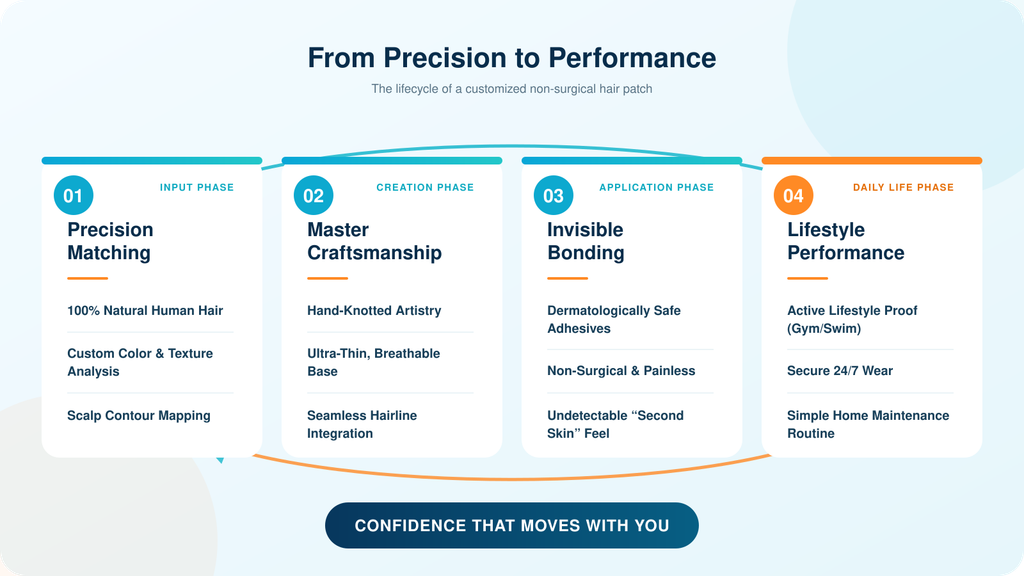
A modern non-surgical hair patch uses 100 percent natural human hair hand-knotted onto a breathable, paper-thin membrane that integrates directly with your scalp. It covers only the thinning or bald area, blending seamlessly into your existing hair.
Key Benefits for Men Under 30:
- Instant Density: You achieve a full head of hair in a single session rather than waiting months for slow growth.
- Zero Pain or Scarring: The process is non-invasive, meaning no needles, no surgical cuts, and no recovery time.
- Complete Style Freedom: Whether you prefer a textured fade, an undercut, or a classic parted look, custom hair systems can be cut and styled to match current hair trends.
- Reversible and Risk-Free: Unlike surgery, non-surgical restoration gives you full control. You can adjust your density, style, or hairline contour at any time as your preferences change.
Base Technologies: Finding the Right Match
The base of a hair patch acts as an invisible second skin. Different base materials cater to different aesthetic needs and daily routines:
| Base Material | Primary Characteristics | Ideal For |
| Swiss Lace | High breathability, lightweight, completely transparent edge. | Warm climates, heavy sweat, and exposed hairline styles. |
| Ultra-Thin Skin | Translucent polymer that matches scalp texture perfectly. | Maximum realism along the part line and simple maintenance. |
| Hybrid Systems | Combines durable monofilament mesh with soft lace or skin borders. | Maximum longevity and higher-density hairstyles. |
By selecting natural human hair that matches your exact hair color, texture, and wave pattern, light reflects off your scalp naturally, keeping the patch completely undetectable even up close.
Living an Active Life with a Hair Patch
A common concern among men in their twenties is whether a hair patch will restrict their daily activities. Modern medical-grade dermatological adhesives are built to withstand high levels of physical movement.
Fitness and Sports
You can run, lift weights, play basketball, and sweat at the gym without worry. The waterproof bond holds firm against sweat and moisture.
Swimming and Water Activities
Modern bonding polymers form a secure barrier against water, allowing you to swim in pools or at the beach with total peace of mind.
Maintenance Routine
Maintaining a hair patch fits easily into a standard grooming routine. You wash and condition the system two to three times a week using sulfate-free products. Periodic maintenance visits every three to four weeks involve removing the patch, cleaning the scalp, trimming your natural hair, and reapplying fresh adhesive.
Psychological Impact: Reclaiming Your Twenties
Your twenties should be dedicated to building your career, creating relationships, and exploring new experiences. Worrying constantly about your hair, wearing hats indoors, or avoiding social gatherings takes a heavy emotional toll.
Restoring your hairline is not just about aesthetics. It removes the daily burden of self-consciousness, allowing you to focus on your goals with full self-assurance. Walking into a room knowing your hair looks great changes how you present yourself to the world.
Why With Us?
At Look Masters, we specialize in helping young men overcome early hair loss with customized, high-end non-surgical hair restoration. We understand that a 23-year-old needs a completely different hair density, hairline shape, and styling approach than an older client.
Our experienced hair specialists conduct detailed scalp mapping, hair texture analysis, and precise color matching to craft a customized hair system that looks entirely natural from every angle.
Hair loss in your twenties is a challenge, but it does not have to define your appearance or hold you back. Experience the confidence of a full head of hair with a tailored solution designed for your lifestyle.