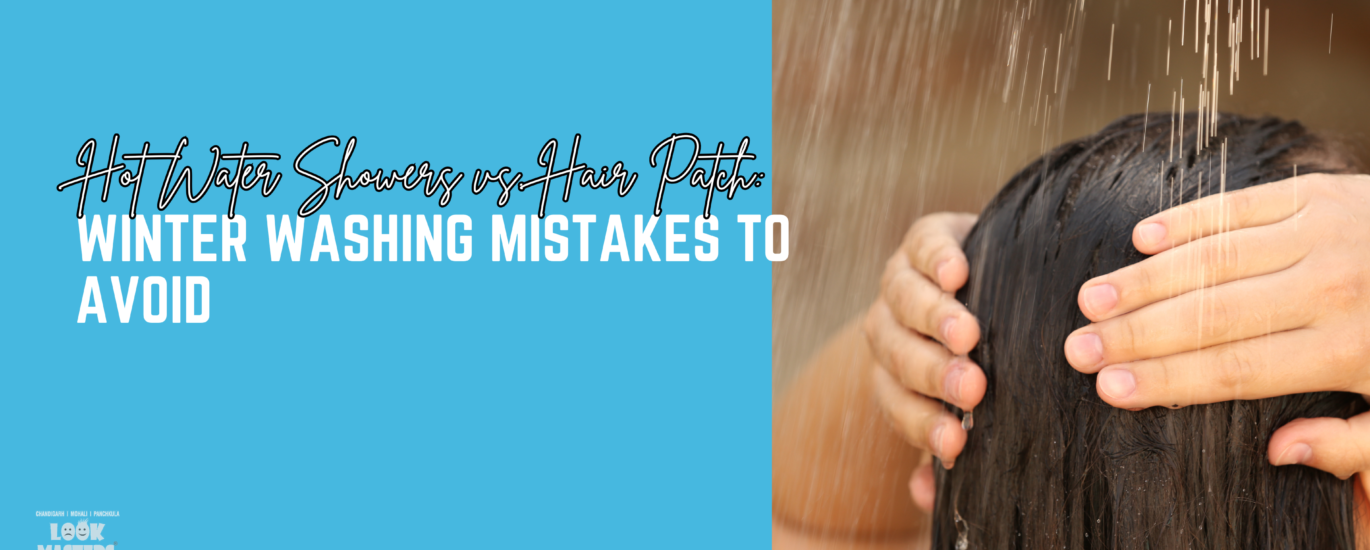
As winter arrives, bringing crisp mornings and chilling breezes across North India, nothing feels more satisfying than stepping into a steaming hot water shower. While hot showers offer instant warmth and relaxation during cold winter months, they present a hidden danger to individuals wearing non-surgical hair replacement systems and hair patches.
Winter brings unique challenges for hair system wearers. Cold outdoor air combined with hot indoor heating dries out hair fibers, while scalding shower water damages delicate base materials and dissolves protective adhesive bonds.
If you want your hair patch to stay soft, full, and securely attached throughout the cold season, understanding how winter washing habits impact hair system longevity is essential. This guide breaks down the science behind hot water damage, common winter washing mistakes, and practical steps to maintain a pristine, undetectable hair system all winter long.
The Physics of Hot Water Damage on Hair Systems
To understand why hot showers harm hair patches, it helps to examine how heat interacts with natural hair strands and non-surgical base materials.
Human hair patches are crafted from 100% natural human hair. Unlike natural hair growing from living follicles on your scalp, hair patch strands do not receive biological nutrients, moisture, or natural sebum oils. Once hair cuticles are stripped of moisture, the strands cannot repair themselves naturally.
1. Cuticle Expansion and Moisture Stripping
Hair cuticles consist of microscopic, scale-like overlapping layers that protect the inner cortex. Hot water causes these cuticles to swell and lift open. When cuticles remain open, essential moisture escapes rapidly, leaving the hair feeling rough, brittle, and prone to severe tangling.
2. Base Knot Softening and Hair Shedding
On lace and monofilament hair systems, individual hair strands are secured using microscopic hand-tied knots. Hot water weakens these knots, making them slide loose easily when brushed or combed.
3. Adhesive Layer Breakdown
Liquid acrylic glues, silicone bonds, and double-sided tapes soft-melt when exposed to sustained temperatures above $38^\circ\text{C}$ ($100^\circ\text{F}$). Steamy showers turn firm adhesives into a soft, gummy residue, leading to early hairline lifting and perimeter slippage.
Base Material Sensitivity to Winter Wash Habits
Different hair patch base materials react uniquely to temperature fluctuations and winter water conditions. Choosing the right care approach for your specific base type prevents structural damage.
| Base Foundation Type | Realism & Hairline | Thermal Sensitivity | Hot Water Impact | Ideal Winter Wash Method |
| Ultra-Thin Skin (0.03mm Poly) | Maximum Realism | Very High | Heat stretches thin polyurethane, causing base warping and a loose fit. | Cool to lukewarm water basin soak; avoid direct hot water spray. |
| French / Swiss Lace | High Airflow & Realism | High | Hot water loosens micro-bleached knots, accelerating crown hair shedding. | Lukewarm rinse; gentle pressing without twisting or pulling. |
| Hybrid (Lace Center, Poly Edge) | High Durability | Moderate | Heat separates poly perimeter seams from lace mesh over time. | Lukewarm water wash with targeted perimeter care. |
| Fine Mono (Monofilament) | Maximum Durability | Moderate | Stronger mesh holds knots, but hair strands still dry out from severe friction. | Cool water rinse paired with deep conditioning masks. |
5 Critical Winter Washing Mistakes to Avoid
Avoiding common winter washing errors preserves the soft texture, rich color, and secure hold of your hair system throughout the cold months.
1. Direct Exposure to Scalding Shower Streams
Stepping under a hot shower stream subjects your hair patch to simultaneous thermal stress and high water pressure. The weight of heavy hot water forces open knot structures while softening perimeter tape bonds.
- The Fix: Wash your hair patch separately using a basin or handheld shower attachment set to lukewarm or cool water. Keep shower water temperature near body temperature (around $32^\circ\text{C}$ to $35^\circ\text{C}$).
2. Over-Shampooing Dry Winter Hair
Winter weather drops ambient humidity levels, naturally drying out hair strands. Washing your hair system daily with shampoo strips away the remaining surface moisture, turning human hair patches stiff and straw-like.
- The Fix: Limit full shampoo washes to once or twice a week. On intermediate wash days, rinse hair with cool water or use a hydrating conditioner-only wash (co-washing) to refresh the style without stripping natural oils.
3. Skipping Leave-In Moisture Shields
Because hair systems lack live scalp follicles, winter indoor heating quickly dries out hair ends, leading to static, frizz, and color fading.
- The Fix: Apply an alcohol-free, hydrating leave-in conditioner spray daily. Focus application on the mid-lengths and ends, keeping products away from the base perimeter where oils can break down bonding adhesives.
4. Aggressive Towel Friction After Washing
When stepping out of a cold shower, the temptation to vigorously rub your head with a bath towel is high. For hair patch wearers, towel friction snaps dry hair fibers, frays lace edges, and causes severe knot matting.
- The Fix: Gently press a soft microfiber towel against the hair patch to blot away moisture. Microfiber absorbs water quickly without creating friction or static.
5. Using High-Heat Blow Dryers
Using hot air settings on hair dryers to dry hair fast during chilly winter mornings damages base foundations and dehydrates human hair strands.
- The Fix: Use the Cool Shot setting on your hair dryer, holding the dryer at least 8 to 10 inches away from your scalp. Alternatively, allow the hair system to air-dry naturally indoors.
Step-by-Step Winter Hair Patch Washing Protocol
Following a structured winter wash routine protects your hair investment and maintains an undetectable hairline all season long.
Pre-Wash Detangling
Before wetting your hair, gently detangle strands using a wide-tooth comb or soft vent brush. Start at the ends and work your way up toward the base. Detangling dry hair prevents knots from tightening when wet.
Lukewarm Water Saturation
Adjust water temperature until it feels lukewarm or slightly cool to the touch. Gently wet the hair, allowing water to flow in the natural direction of hair growth—from the crown down toward the ends.
Gentle Downward Shampoo Application
Dispense a small amount of sulfate-free, hydrating shampoo into your palms and lather. Smooth the lather through the hair in a downward motion. Never rub hair in circular motions, as this causes severe tangles.
Deep Moisture Conditioning
Rinse out shampoo thoroughly with cool water. Apply a rich, hydrating conditioning mask to the hair mid-lengths and tips. Leave the conditioner on for 3 to 5 minutes to restore softness before rinsing clean.
Microfiber Blotting & Cool Drying
Blot excess water using a microfiber towel. Apply a lightweight leave-in serum to the tips and allow the system to dry naturally or blow-dry using a cool air setting.
Winter Maintenance Schedule for Hair Patch Wearers
Adjusting your maintenance frequency based on winter activity levels keeps your scalp healthy and your hair system secure.
| Activity & Fitness Level | Recommended Re-Bonding Interval | Wash Frequency | Key Winter Product Need |
| Low Outdoor Activity / Indoor Routine | Every 3 to 4 Weeks | 1 Time Per Week | Hydrating Leave-In Conditioner Spray & Argan Serum |
| Moderate Daily Fitness / Gym | Every 2 to 3 Weeks | 2 Times Per Week | Waterproof Scalp Protector & Sulfate-Free Shampoo |
| Heavy Athletics / High Sweat | Every 10 to 14 Days | 2 Times Per Week | Citrus Adhesive Solvent & Deep Conditioning Mask |
Winter Hair Care Troubleshooting Guide
Use this quick troubleshooting reference to fix common winter hair patch issues quickly:
| Issue Observed | Primary Root Cause | Instant Corrective Action |
| Static electricity & flyaway hair | Dry winter air & synthetic sweater friction | Spray leave-in conditioner and use a wooden or anti-static comb. |
| Hair patch feels stiff or dry | Hot shower water or sulfate shampoo usage | Perform a 15-minute deep conditioning mask treatment on mid-lengths. |
| Hairline edges lift early | Hot water softening boundary adhesive | Blot dry, apply isopropyl alcohol under the edge, and re-press with touch-up glue. |
| Shedding at the crown area | Hot water loosening hand-tied base knots | Wash strictly with cool water and avoid brushing hair while wet. |
Keep Your Hair System Pristine All Winter
Enjoying warm winter comforts does not have to come at the expense of your hair system. By replacing hot shower streams with lukewarm rinses, using sulfate-free hydrating cleansers, blotting with microfiber towels, and applying daily leave-in conditioner shields, you can preserve natural density, soft texture, and a secure bond all winter long.
Lookmasters specialize in high-quality non-surgical hair replacement solutions across Chandigarh, Mohali, and Panchkula. From custom human hair patches to professional winter maintenance services, our experienced team ensures your hair remains natural, comfortable, and completely undetectable through every season.
Need expert hair patch re-bonding, maintenance guidance, or custom hair solutions in the Tricity region? Visit our experts today.